

What is Ferrovanadium Metal?
Ferrovanadium Metalis not a pure metal in the traditional sense, but rather an alloy primarily composed of iron (Fe) and vanadium (V). It is categorized as a ferroalloy, meaning it is a metallic material added to steel and other alloys to impart specific physical and chemical properties. The term "Ferrovanadium Metal" is often used to describe the metallic form of the FeV alloythat is used directly in metallurgical processes.
The main purpose of Ferrovanadium Metal is to serve as an alloying agent in steelmaking, where it introduces vanadiuminto the molten steel to enhance its strength, toughness, hardness, and high-temperature performance. Vanadium, when combined with iron and carbon, forms hard and stable carbidesthat significantly improve the mechanical properties of the resulting steel.
Ferrovanadium Metal typically contains 35% to 85% vanadium, depending on the specific grade, with iron making up the majority of the balance. The alloy may also contain small but controlled amounts of other elements such as silicon, aluminum, carbon, sulfur, and phosphorus, which can vary based on the intended use and production method.
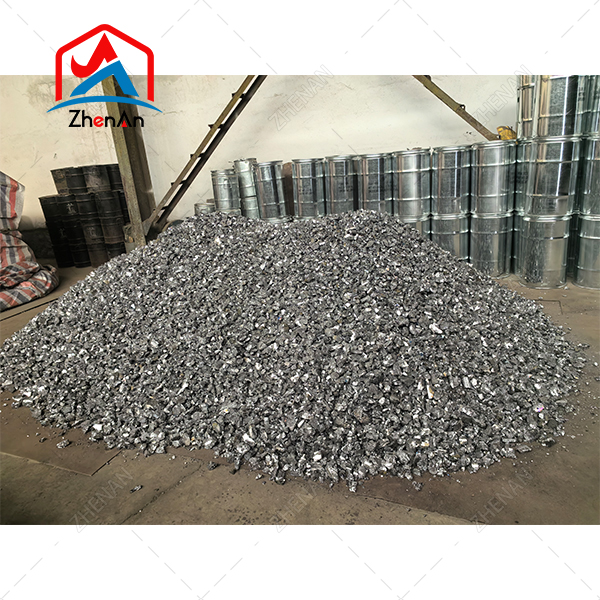
There are different types or grades of Ferrovanadium Metal, often categorized by their vanadium content and carbon level, such as Low-Carbon Ferrovanadium (LCFeV)or High Carbon Ferrovanadium (HCFeV). The "metal"aspect emphasizes its metallic bonding nature and utility as a molten additivein steel furnaces, rather than as a powder or compound.
Ferrovanadium Metal is produced via metallurgical processes such as aluminothermic reduction(using aluminum to reduce vanadium oxides) or silicothermic routes, sometimes involving electric arc furnaces. The resulting alloy is dense, metallic, and easy to handle in steel ladles or induction furnaces.
In essence, Ferrovanadium Metalis a versatile and essential input in metallurgy, valued for its ability to transform ordinary steel into high-performance materialwith enhanced durability, hardness, and resistance to wear or heat. It acts as a delivery mechanism for vanadium, one of the most effective alloying elements in modern metallurgy.