

Ferrovanadium specifications define the chemical composition, purity levels, and physical properties of the alloy, ensuring it meets the requirements for specific industrial applications. These specifications vary depending on the grade of FeV, such as high-carbon, medium-carbon, low-carbon, or high-purity FeV, and are often set by international standards organizationslike ASTM, DIN, GB (China), ISO, or SAE.A typical Ferrovanadium specificationincludes the following key parameters:
1.Vanadium (V) Content– Ranges from 35% to 85%, depending on the grade. Common industrial grades like FeV 40 or FeV 50contain 35–50% V, while high-purity grades (e.g., FeV 80)contain 78–82% Vor more.
2.Iron (Fe) Content– Makes up the majority of the balance, usually over 50%, depending on vanadium content.
3.Carbon (C) Content– Varies by grade:
•High Carbon FeV: 1.5%–4.0% C
•Medium Carbon FeV: 0.3%–0.8% C
•Low Carbon FeV: <0.1%–0.3% CLower carbon is critical for premium and high-performance steel applications.
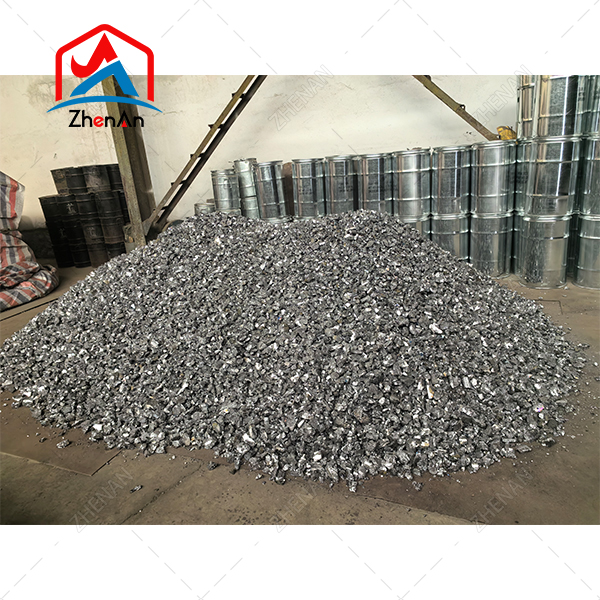
4.Silicon (Si)– Usually limited to 1%–4%, but kept low in high-purity grades.
5.Sulfur (S) & Phosphorus (P)– Impurities that are minimized(generally <0.05% Sand <0.04% P) in high-grade FeV to avoid steel embrittlement.
6.Aluminum (Al)– May be present as a reducing agent residue, but controlled in high-purity versions.
Specifications also define physical propertiessuch as:
•Appearance: Typically a grayish metallic lump or powder
•Density: Around 5.5–6.0 g/cm³
•Melting Point: Above 1400°C, depending on exact composition
Standardized FeV grades(e.g., FeV 50, FeV 80) are produced to meet specific customer and industry needs, especially in steelmaking, tooling, and aerospace. Buyers often specify exact compositional limitsbased on their end-use requirements.In conclusion, Ferrovanadium specifications ensure consistency, quality, and performancein metallurgical applications, with variations tailored for cost-sensitive industrial use or high-end critical applications.