

FeV (Ferrovanadium)plays a critical role in various industrial applications, primarily through its use as an alloying agent in steel and other metal alloys. Its main industrial use is to enhance the mechanical properties and performanceof steel, making it stronger, tougher, and more resistant to wear, heat, and deformation. These improved properties are essential across a wide range of industries.The primary industrial use of FeVis in the steelmaking industry, where it is added to carbon steels, alloy steels, and high-strength low-alloy (HSLA) steelsto improve their strength-to-weight ratio, hardness, and durability. By forming stable vanadium carbides and nitrides, FeV refines the steel’s grain structure, which increases tensile strength, fatigue resistance, and impact toughness.
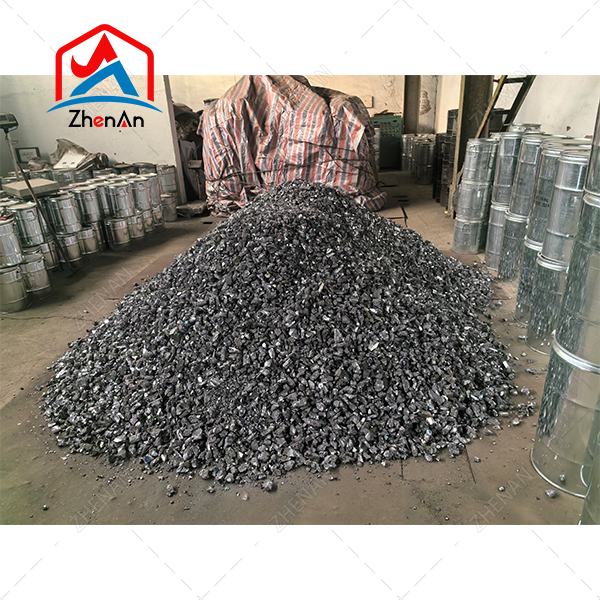
This makes FeV-treated steel ideal for structural components, pipelines, heavy machinery, and construction materials.In the automotive industry, FeV is used to manufacture high-performance steelsfor chassis, gears, crankshafts, and suspension systems. These components require high strength, wear resistance, and lightweight properties, all of which are achieved through vanadium alloying.The aerospace and defense industriesrely on high-purity FeVto produce aircraft frames, jet engine components, and landing gear, which must endure extreme temperatures, pressure, and fatigue. FeV improves high-temperature stability and creep resistancein these critical parts.Other industrial uses include:
•Energy sector: Turbine blades, oil drilling equipment, and nuclear reactor components benefit from FeV’s thermal stability.
•Tool and die manufacturing: FeV is used in high-speed steels and tool steelsfor cutting, molding, and shaping operations.
•Railway and transportation infrastructure: FeV strengthens rails and structural components for durability under heavy loads.
In summary, FeV’s industrial use is centered around enhancing steel performancefor demanding applications. Its ability to impart strength, toughness, and heat resistancemakes it indispensable in industries ranging from construction and automotive to aerospace and energy.