

The term “Ferrovanadium Compound”is not commonly used in metallurgy in the same way as “Ferrovanadium Alloy”, but it can refer to vanadium-containing chemical compoundsthat may be intermediates in the production of ferrovanadium metal or alloy. However, in the context of industrial usage, Ferrovanadium itself is an alloy, not a compound, and the phrase “Ferrovanadium Compound” might be misunderstood or misapplied.To clarify:
•Ferrovanadium (FeV)is a metallic alloymade primarily of iron (Fe) and vanadium (V). It is not a chemical compoundwith a fixed stoichiometry, but rather a solid solution or mixtureof these elements, along with possible minor additives like silicon or carbon.
•If someone refers to a “Ferrovanadium Compound”, they might be informally describing:
•Vanadium oxides (e.g., V₂O₅, V₂O₃)– which are raw materialsused to produce ferrovanadium.
•Vanadium carbides or nitrides– which can form inside steeldue to vanadium’s reaction with carbon or nitrogen.
•Intermediate chemical formsused during the production processof ferrovanadium, such as vanadium pentoxide reduced with aluminum or silicon.
In the true sense, there is no widely recognized “Ferrovanadium Compound” as a standalone product. Instead:
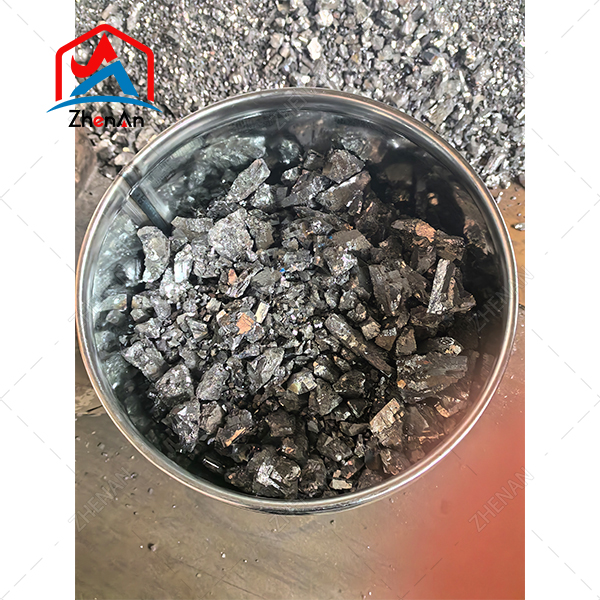
•Ferrovanadium is an alloyused for alloying steel.
•Vanadium compounds(like V₂O₅) are precursors or raw inputsused to manufacture ferrovanadiumthrough reduction processes.
So, if the term “Ferrovanadium Compound” is used, it’s likely referring to:
•Chemical precursors(e.g., vanadium oxides) used in the production of the FeV alloy, or
•Vanadium-rich phasesthat form within steelafter alloying (like VC – vanadium carbide).
Conclusion:There is no standard “Ferrovanadium Compound” productin metallurgy. Ferrovanadium itself is an alloy, and any reference to a “compound” likely pertains to vanadium chemicals used in its productionor resulting microstructural phasesin alloyed steel. For practical and industrial purposes, Ferrovanadium is always referred to as an alloy, not a compound.