

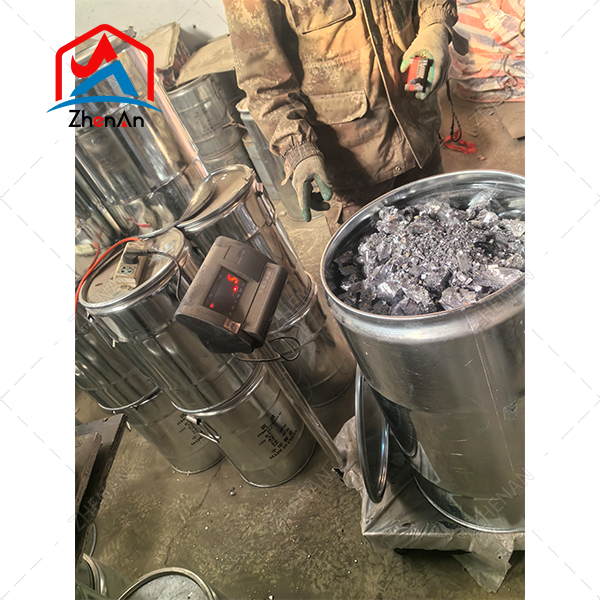
FeV Alloy 75 Percent(or Ferrovanadium 75, sometimes noted as FeV 75) is a high-vanadium ferroalloycontaining approximately 75% vanadium (V), with the remainder mainly composed of iron (Fe)and small amounts of other elements such as carbon, silicon, and trace impurities. It is one of the most widely used mid-to-high grade ferrovanadium alloys, balancing performance and cost-effectivenessfor a variety of steel and alloy applications.
Composition:
•Vanadium (V):~74%–76% (commonly rounded to 75%)
•Iron (Fe):~22%–24%
•Carbon (C):Typically 0.3%–0.8%(may vary by producer and grade)
•Silicon (Si), Sulfur (S), Phosphorus (P):Usually controlled but higher than in ultra-high purity grades
FeV 75 is often classified as a Medium to High Carbon Ferrovanadium, though Low Carbon versions (LCFeV 75)with <0.1% carbonare also available for premium steel applications.
⚙️ Industrial Uses:
FeV 75 is commonly used in:
•High-Strength Low-Alloy (HSLA) Steels
•Construction and structural steels
•Automotive components
•Tool and die steels
•Spring steels and heavy machinery parts
It is valued for its ability to:
•Improve strength and hardness
•Refine grain size
•Enhance wear and fatigue resistance
✅ Benefits:
•Good balance of vanadium content and cost
•Effective in improving mechanical properties of steel
•Widely available and cost-efficient for general high-performance use
•Suitable for both standard and specialized steelmaking
FeV 75 is one of the most popular industrial gradesbecause it provides substantial alloying benefitswithout the high cost of FeV 80 or FeV 85. It is suitable for manufacturers seeking high performance at a reasonable price point.In conclusion, FeV Alloy 75 Percentis a versatile and widely used ferrovanadium grade, valued for its ability to enhance steel strength, toughness, and durability, making it suitable for construction, automotive, tooling, and general industrial applications.
✅ Would you like additional Q&As on:
•FeV 50 vs FeV 75 vs FeV 80 – a comparison?
•How to choose the right FeV grade for your steel?
•Production methods of FeV 75 or FeV 80?
•Global suppliers or pricing trends?
I can continue with more 300-word Q&Asin the same format. Just let me know the topics you'd like covered.